
GLP-1 Transition: How to Maintain Muscle,
Keep The Weight Off, and Build Habits That Last
Before We Begin
If you’re taking a GLP-1 medication, considering one, or thinking about what comes next after reaching your goal, you’re not alone.
This article isn’t about telling you whether you should or shouldn’t take a GLP-1 medication. That’s a conversation to have with your healthcare provider.
Instead, my goal is to help you understand what your body needs before, during, and beyond your weight-loss journey so you can build habits that support your health—regardless of where that journey leads.
Losing weight is one chapter of the story. Learning how to nourish your body, protect your muscle, and build lasting habits is what helps write the next one.
The medication may help create the opportunity for change.
Your daily habits determine how much of that change becomes part of your life.
The Transition Most People Don’t Talk About
GLP-1 medications have helped many people lose weight and improve their health.
But eventually, many people begin asking a different question:
“How do I maintain my results when life starts to feel normal again?”
That’s where this conversation begins.
Whether you continue taking a GLP-1 medication long-term, reduce your dose, or eventually stop altogether, the habits you build along the way become one of the most valuable parts of the journey.
The goal isn’t simply to lose weight.
It’s to build a healthier lifestyle that continues supporting you long after the excitement of the scale begins to fade.
Why This Transition Matters More Than the Number on the Scale
For many women, seeing the number on the scale finally begin to move feels like a huge victory—and it is.
But there’s another conversation that’s just as important.
The goal isn’t simply to lose weight. It’s to lose weight while building a healthier body.
One of the biggest reasons this matters is because GLP-1 medications often reduce appetite significantly. While eating less can support weight loss, it can also make it easier to eat too little protein and too few nutrients if you’re not intentional.
When your appetite is small, your nutrition can’t afford to be.
Every bite has to count.
When Every Bite Counts
Think of your plate differently.
Instead of simply asking, “What sounds good?”
Try asking:
- Where is my protein?
- Am I giving my body what it needs today?
- Will this meal help support the healthier body I’m trying to build?
Small shifts in thinking often lead to lasting habits.
Why Protein Matters So Much
Protein plays an important role in nearly every stage of healthy aging.
It helps support muscle maintenance, strength, recovery, metabolism, immune function, and many of the tissues your body relies on every day.
During weight loss, getting enough protein becomes even more important because your body isn’t just losing fat—it can also lose muscle if protein intake and resistance exercise aren’t prioritized.
Protecting muscle isn’t just about looking toned.
It’s about supporting balance, mobility, independence, metabolism, and overall health for years to come.
It’s not about eating perfectly.
It’s about helping the food you do eat work harder for your body.
Building Habits While the Opportunity Is Here
One of the greatest benefits of a GLP-1 medication isn’t just the weight loss.
It’s the opportunity it creates.
For many people, that creates something they haven’t experienced in years:
Space to build new habits.
Instead of fighting your body every day, you have an opportunity to practice new routines with fewer distractions from constant hunger or food noise.
Think of this as a learning season.
A season to discover what helps you feel your best.
To learn how to nourish your body.
To notice what gives you energy.
And to build habits that can continue supporting you long after the medication is no longer the center of your journey.
Small Habits Create Big Results
Healthy habits don’t have to be complicated.
They simply need to be repeated often enough that they become part of everyday life.
That might mean:
- Prioritizing protein at each meal.
- Taking a short walk after dinner.
- Drinking more water throughout the day.
- Adding strength training a few times each week.
- Planning simple meals before you’re overly hungry.
None of these habits seem dramatic on their own.
Together, they create a foundation that becomes stronger over time.
Think Beyond Today
Instead of asking,
“What will help me lose weight this week?”
Try asking,
“What habits do I want to still have a year from now?”
That one question changes your focus from temporary results to long-term success.
Because the goal isn’t simply reaching your goal weight.
It’s becoming the kind of person who naturally lives in a way that helps maintain it.
Making Your Habits Work for You
Healthy habits don’t happen by accident.
They’re built through small, intentional choices repeated over time.
One of the biggest advantages of a GLP-1 medication is that, for many people, it creates a window of opportunity to build habits with fewer distractions from constant hunger or food noise.
Rather than following another strict diet, this is your opportunity to create routines you can realistically continue for years to come.
Think About Your Day, Not Just Your Meals
Instead of focusing on a single meal, step back and look at the bigger picture.
Ask yourself:
- Did I spread my protein throughout the day?
- Will today’s choices still work for me six months from now?
- Am I building habits I can realistically maintain?
Small questions like these help shift your focus from quick fixes to lasting progress.
Build Your Plate with Intention
Rather than thinking about what to remove from your plate, begin by thinking about what to add.
Start with protein.
Then build around it with colorful vegetables, healthy fats, fiber-rich carbohydrates, and foods you genuinely enjoy.
If you’re wondering what that looks like in real life, don’t worry—I’ll be sharing the protein-rich meals, simple recipes, and everyday routines that have worked well for me, including my Morning Reset routine, protein shake, and other practical ideas you can easily incorporate into your own day.
My goal isn’t just to explain the science.
It’s to help you put it into practice.
Your Environment Matters More Than You Think
One of the most overlooked parts of lasting success has very little to do with willpower.
It has to do with your environment.
When nutritious, protein-rich foods are easy to see, prepare, and reach, healthy decisions require less effort.
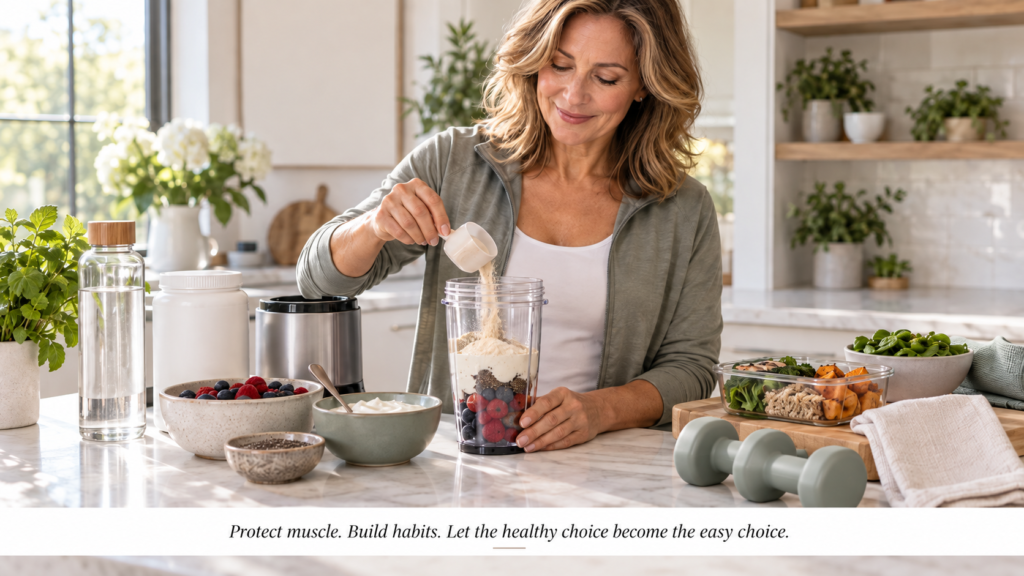
Design your environment so the healthy choice becomes the easy choice.
Sometimes lasting change begins with something as simple as keeping healthy foods visible, preparing ingredients ahead of time, or creating a morning routine that removes friction instead of adding to it.
Remember This Is a Skill
Every thoughtful meal.
Every protein-first decision.
Every strength-building workout.
Every small improvement.
They’re all part of learning a new way to care for your body.
The goal isn’t perfection.
It’s progress.
And every small step forward is one worth celebrating.
This Is About More Than Weight Loss
Healthy aging isn’t measured by a number on the scale.
It’s reflected in how you feel, how you move, and the habits that continue supporting you long after the weight is gone.
The number on the scale may open the door.
The habits you build are what help you walk through it.
Whatever Your Next Chapter Looks Like
There isn’t one path that’s right for everyone.
The best path is the one you and your healthcare provider decide is right for you.
Whether you continue taking a GLP-1 medication, reduce your dose, or eventually stop altogether, the habits you build today will continue serving you tomorrow.
Every healthy choice you make is an investment in the life you’re creating.
One Better Habit at a Time
You don’t have to become perfect before you begin.
You simply have to begin.
Start with one better habit.
Build another when you’re ready.
Then another.
Small, consistent choices have a remarkable way of becoming lasting change.
The medication may help create the opportunity.
The habits you build determine how much of that opportunity becomes part of your life.
And that journey starts with one better habit at a time.